The Friends Meeting at Dover, New Hampshire, is one of
the oldest in British North America, with worship held there as early as 1662 when
three Quaker women missionaries arrived on Dover Neck. Originally called Piscataqua,
the meeting emerged as Dover Monthly Meeting by the latter decades of the
seventeenth century and became the hub of a thriving Quaker community and the font
from which several other New Hampshire meetings derived. In addition to overseeing a
number of worship groups and preparatory meetings, Dover became the mother of
monthlies and Berwick and Sandwich, which were set off in 1802, and Gonic in
1981.
The records of Dover Monthly Meeting offer extensive documentation of one
of the oldest Quaker meetings in northern New England. Although most of the earliest
records have not survived, the collection includes a nearly unbroken set of minutes
from the turn of the eighteen century to 1981; extensive records of births, deaths,
and marriages; spotty records for Ministry and Oversight and finance, and an array
of recent newsletters. Minutes for the Women's Meeting for the years 1783-1814 are
not present and presumed lost.
The Friends Meeting at Dover, New Hampshire, is one of the oldest in British North
America, visited by two of the "Boston Martyrs," William Robinson and Marmaduke
Stevenson in 1659. The first Quaker worship in Dover probably dates to 1662, when
three Quaker women missionaries (Mary Tompkin, Ann Coleman, and Alice Ambrose)
arrived on Dover Neck. Originally called Piscataqua, the meeting emerged as Dover
Monthly Meeting by the latter decades of the seventeenth century and became the hub
of a thriving Quaker community and the font from which several other New Hampshire
meetings derived. In addition to overseeing a number of worship groups and
preparatory meetings, Dover became the mother of monthlies and Berwick and Sandwich,
which were set off in 1802, and Gonic in 1981.
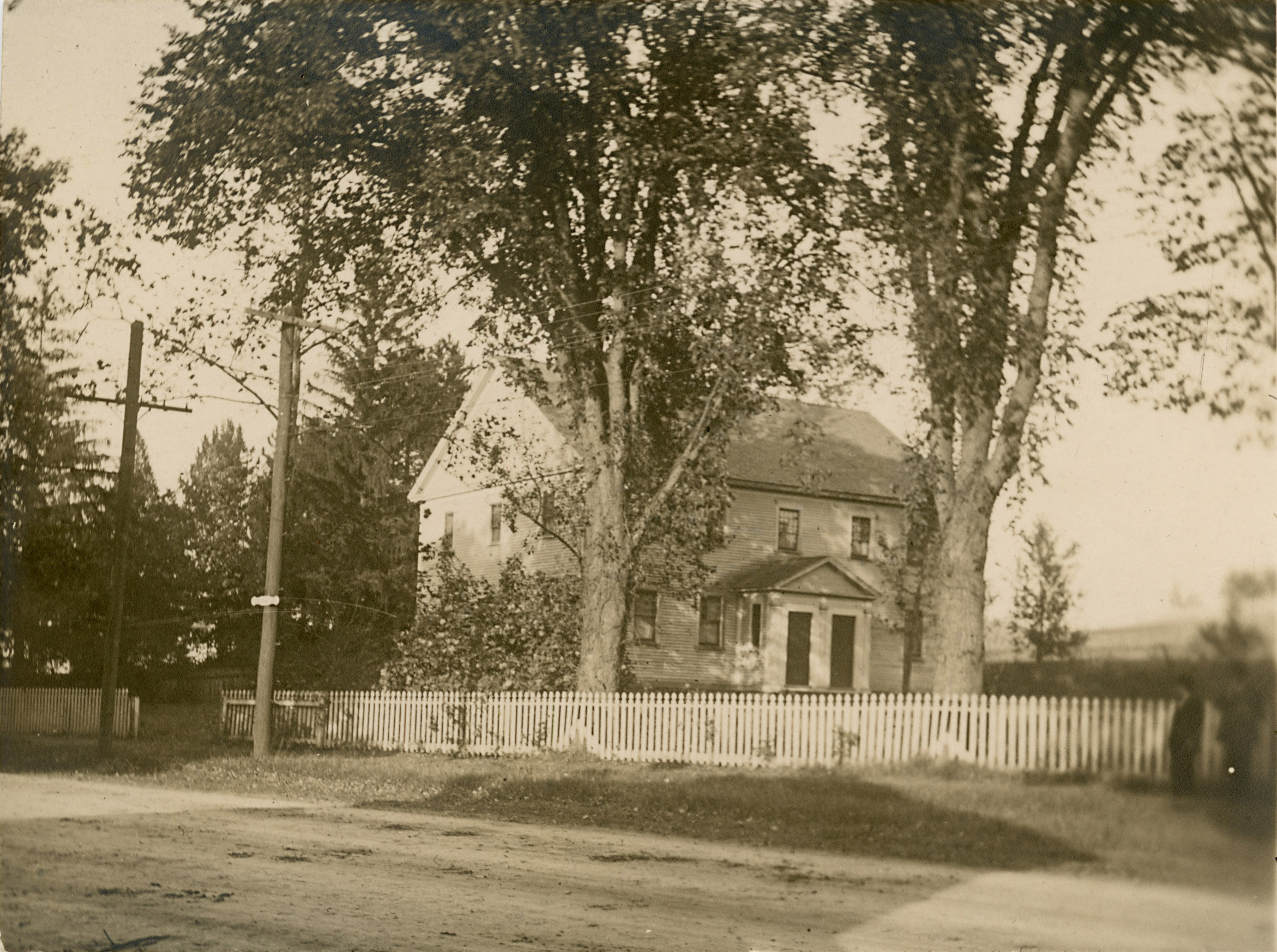
Population growth at Dover itself required construction of a second, larger
meetinghouse in 1712 with a third following in 1768. This last structure remains in
use today and is listed on the National
Register of Historic Places. It is considered the only surviving
eighteenth century Quaker meetinghouse in the state. Reaching a peak in the early
nineteenth century, however, the Quaker community in Dover began a slow decline,
leading to a cessation of regular worship between 1912 and 1955. Dover remained
active administratively overseeing meetings for worship at Gonic and Meaderboro.
Within New England Yearly Meeting, Dover was part of Salem Quarterly for more than a
century (1705-1815) until Dover Quarterly was established. The long list of worship
groups and preparatory meetings under its care have included :
Worship groups
Preparative meetings
Barrington (1775-1783)
Berwick (1750-1761)
Berwick (1761-1802)
Chestnut Hill (1838-1864)
Cocheco (1720-1763)
Cocheco (1763-1768)
Dover (1901-1912, met irregularly, 1912-1955)
Dover (1701-1901, 1955-1981 (also called Cocheco
Preparative Meeting)
Gilmanton (1795-1814, 1846-ca.1889)
Gilmanton (1814-1846)
Gonic (ca.1870-1950)
Gonic (1950-1980)
Kittery (1742-1763)
Kittery (1763-1783)
Lee (1795-1838, 1841-1846)
Lower Rochester (1742-1846): became Pine Grove
Worship Group
Meaderboro (1782-1962): also Upper Rochester Worship
Group, under Rochester Preparative Meeting, 1950-1962
New Durham (1797-1870)
Pine Grove (1846-ca.1870): became Gonic Worship
Group
Rochester (1801-1901, 1950-1962)
Sandwich (1783-1790)
Sandwich (1790-1802)
Seacoast (1970-1975)
West Epping (1973-1981): became part of Gonic
Monthly
Scope of collection
The records of Dover Monthly Meeting offer extensive documentation of one of the
oldest Quaker meetings in northern New England. Although most of the earliest
records have not survived, the collection includes a nearly unbroken set of minutes
from the turn of the eighteen century to 1981; extensive records of births, deaths,
and marriages; spotty records for Ministry and Oversight and finance, and an array
of recent newsletters. Minutes for the Women's Meeting for the years 1783-1814 are
not present and presumed lost.